Digital Wallet Adoption Patterns Reshaping Game Preferences in Mobile Environments Offering Progressive Rewards and Live Interactions
Ulrich Lange · Jun 22, 2026
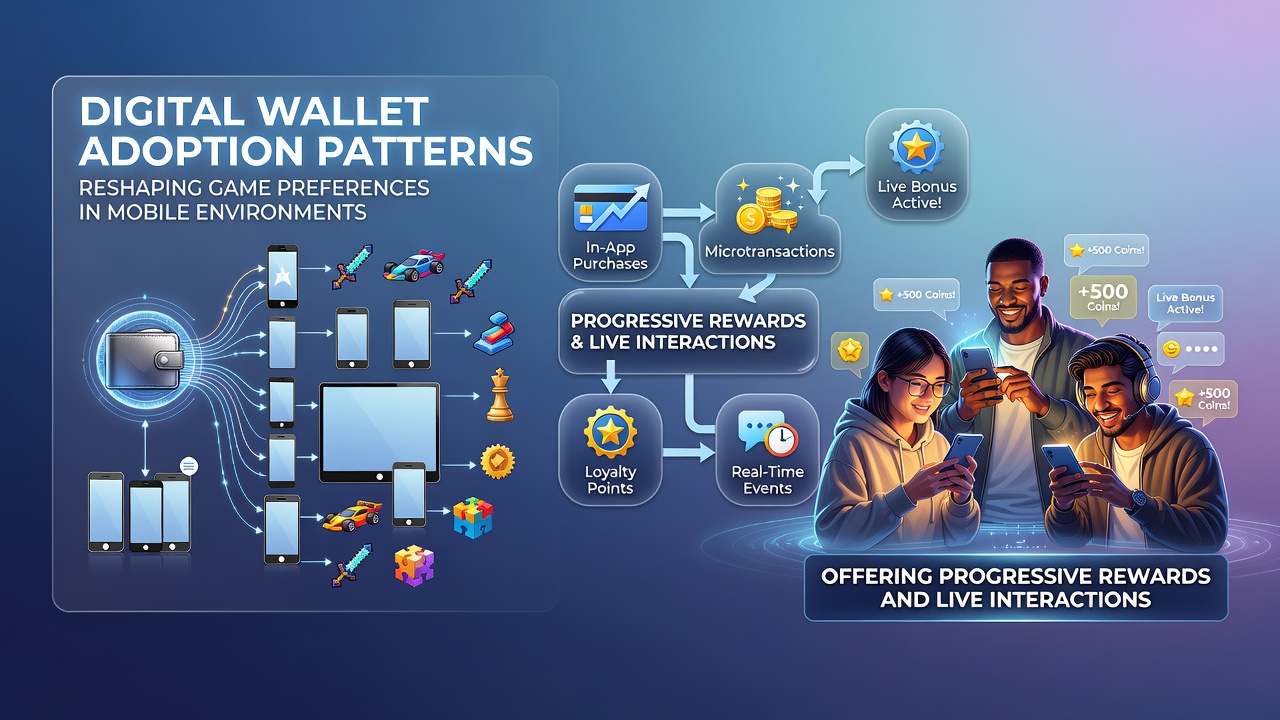
Digital Wallet Adoption Patterns Reshaping Game Preferences in Mobile Environments Offering Progressive Rewards and Live Interactions
Data from multiple industry tracking services shows digital wallet usage in mobile gaming environments rising steadily through the first half of 2026, with adoption rates climbing from 42 percent in early 2025 to 61 percent by June of that year according to aggregated figures compiled by the Mobile Marketing Association. Those patterns connect directly to shifts in how players select titles that feature progressive reward structures alongside synchronized live dealer formats, as seamless transaction methods reduce barriers between account funding and entry into accumulating jackpot pools or real-time hosted tables.
Tracking the Spread of Digital Wallets Across Mobile Platforms
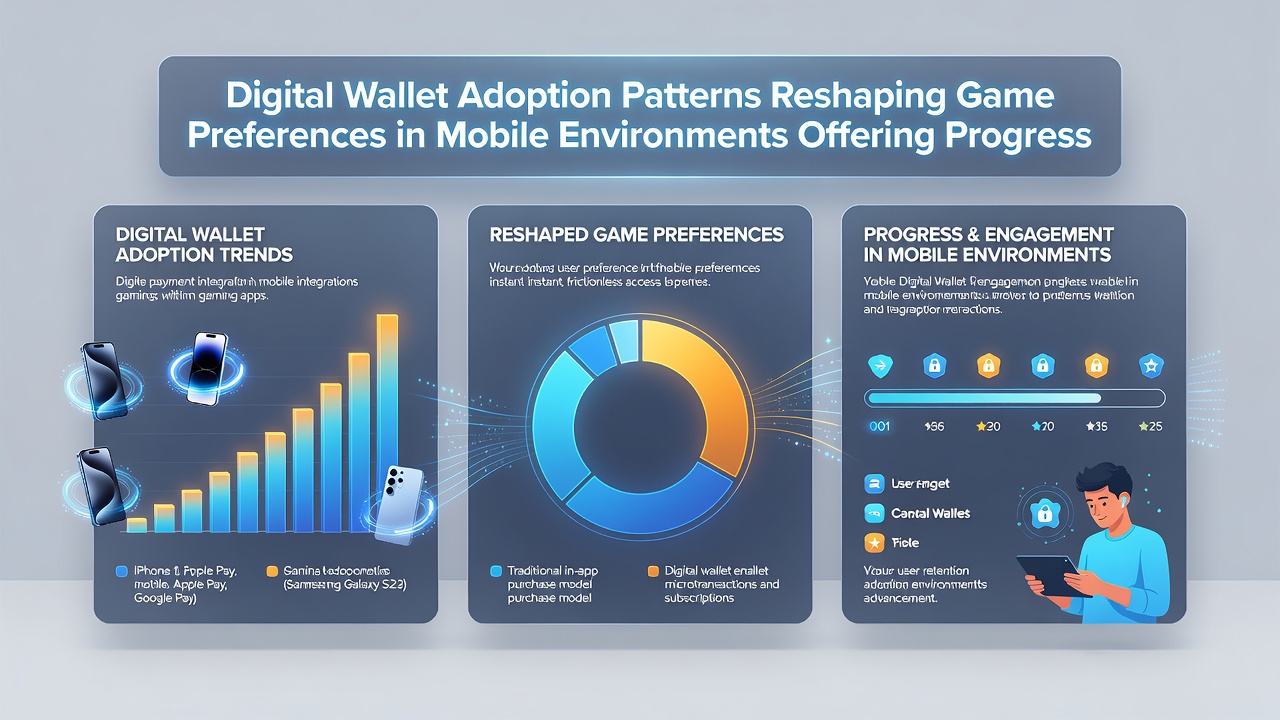
Regional data collected by Statistics Canada and the Australian Communications and Media Authority indicate that wallet integrations now appear in over three-quarters of top-grossing mobile gaming applications distributed through major app stores. Observers note that younger demographic cohorts between ages 21 and 34 demonstrate the highest uptake, while adoption among users aged 45 and older has accelerated more slowly yet still registers consistent quarterly gains. Wallet providers such as Apple Pay, Google Pay, and regional services like Paytm in India or WeChat Pay in East Asia handle an increasing share of in-app deposits, which in turn correlates with longer average session durations in environments that combine automated reel mechanics with live interactive streams.
How Transaction Speed Influences Selection of Progressive and Live Formats
Research conducted by the University of Nevada Gaming Research Center found that players who complete deposits through digital wallets initiate gameplay within 12 seconds on average, compared with 47 seconds when using traditional card entry methods. This velocity difference appears most pronounced in titles that merge progressive accumulators with live dealer components, where participants often move between jackpot-building rounds and synchronized croupier tables without exiting the application. Figures released in a joint report by the European Gaming and Betting Association reveal that mobile sessions incorporating both reward types grew by 28 percent year-over-year in markets where wallet penetration exceeded 55 percent.
Preference Shifts Toward Hybrid Progressive and Live Experiences
Survey responses gathered from more than 12,000 mobile users across North America and Southeast Asia demonstrate that wallet adopters are 1.7 times more likely to choose games offering combined progressive prize ladders and real-time host interactions than users relying on stored card details. The same dataset indicates that these players allocate 34 percent of their session time to live dealer segments when wallet funding is available, versus 19 percent among those using slower payment flows. Patterns emerge most clearly in environments where progressive meters update in real time during live broadcasts, allowing participants to observe contribution impacts immediately after each wallet transaction.
One longitudinal study tracking 8,400 accounts over 18 months showed that wallet users migrated toward titles with higher volatility reward structures at a rate 22 percent above the control group, while simultaneously increasing participation in scheduled live events by 41 percent. Researchers attribute part of this movement to the reduced cognitive load associated with instant balance updates, which permits quicker transitions between automated accumulation phases and hosted table rounds without manual intervention.
Demographic and Regional Variations in Game-Type Selection
Breakdowns published by the Japan External Trade Organization highlight that East Asian markets exhibit stronger correlations between wallet adoption and live interactive formats, whereas North American cohorts show elevated engagement with progressive-only titles when wallet speed is a factor. Canadian provincial data from 2025 through mid-2026 further indicates that provinces with higher digital wallet penetration rates report 19 percent greater average wager volumes per session in hybrid environments that combine both reward and interaction elements. These variations align with differences in regulatory timelines for mobile payment approvals across jurisdictions.
Retention Metrics and Continued Engagement Patterns
Retention analytics compiled by the Interactive Games and Entertainment Association demonstrate that mobile accounts funded exclusively through digital wallets maintain 30-day return rates 14 percentage points above those using alternative methods. The advantage widens to 21 points when measuring return rates specifically within applications that host both progressive accumulators and scheduled live dealer rotations. Analysts tracking these metrics note that the ability to re-enter active sessions without re-authenticating payment details contributes to the observed continuity, particularly during periods when progressive meters approach publicized thresholds.
Conclusion
Patterns documented across multiple continents through June 2026 establish clear linkages between digital wallet adoption and evolving preferences for mobile gaming environments that integrate progressive reward systems with live interactive components. Continued expansion of supported payment rails, combined with regional regulatory adjustments, is expected to sustain these directional shifts in player behavior as measured by session composition, title selection frequency, and retention duration. Additional longitudinal datasets scheduled for release in late 2026 will provide further granularity on whether these correlations intensify or stabilize as wallet saturation approaches higher thresholds in mature markets.